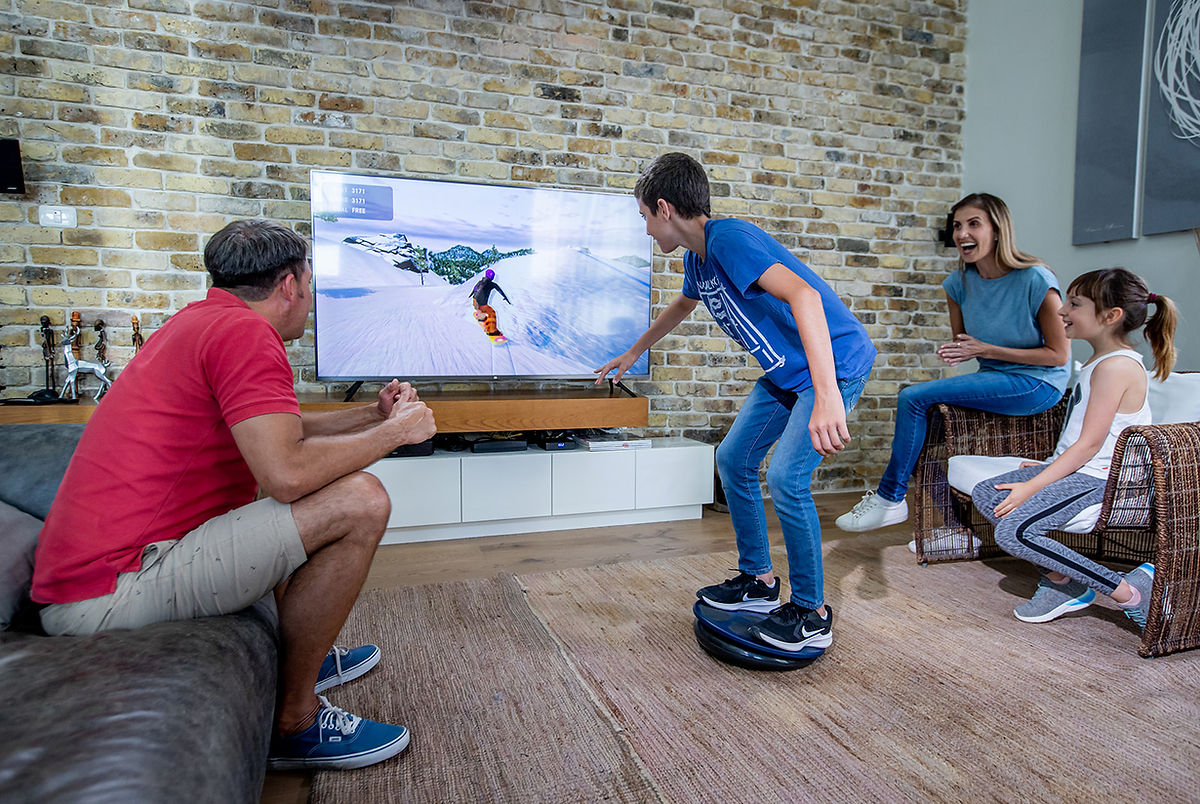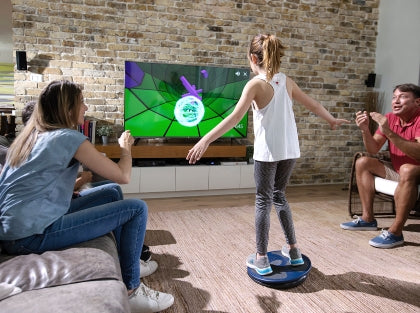
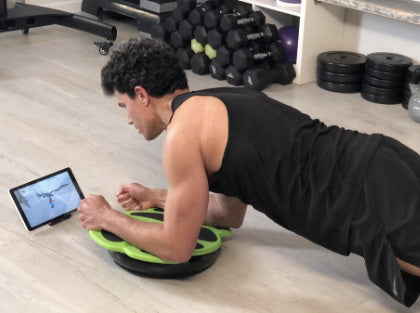
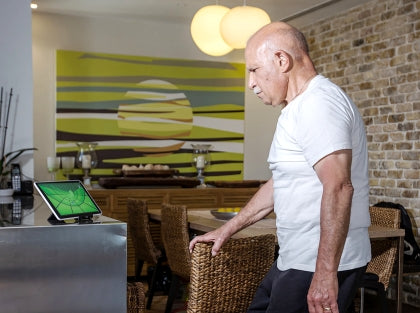
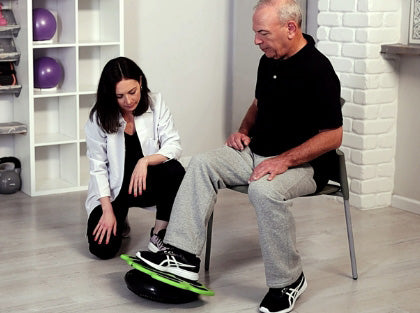




This is not another exercise video library. This is BoBo.
Physical tools that get patients to actually train – not just watch. BoBo combines engaging hardware, real-time feedback, and objective performance metrics, all connected to one RTM-ready platform. Better adherence, better data, better outcomes.
Enroll & Onboard Patients
Easily register new patients, assign them a BoBo device for home use, and guide them through their first steps with a personalized home exercise program.
Stay Connected Between Sessions
Adjust care plans, send messages to patients, and keep them motivated – with every activity automatically tracked in the background.
Track & Bill with Ease
Follow patient progress toward RTM milestones and generate documentation that makes reimbursement simple.
Estimate your RTM revenue
Enter a few assumptions to estimate monthly and annual RTM revenue. Rates reflect average Medicare reimbursement.
Compatible BoBo Devices for RTM
Our RTM workflow works with physical BoBo devices designed for in-clinic and at-home use — ensuring consistent training, meaningful data, and real patient engagement.
Can rehab really live inside a video?
Videos can explain an exercise — but they can’t create real interaction, real control, or real motivation. If you want patients (especially kids) to actually practice at home, you need a physical tool that feels like a game — not homework.
That’s why BoBo is built around connected physical devices: BoBo Balance Board turns training into interactive balance games with real-time feedback, and BoBo Dice trains real dexterity, in-hand manipulation, coordination, and cognitive-motor challenges — beyond repetition.
through games
feedback
performance data
at home
Clinic → Home → Clinic. Keep practice consistent.
We’re happy to see more and more clinics adopting the hybrid approach — and emphasizing what really matters in rehab: practice continuity. Treatment starts in the clinic, continues at home, returns to the clinic, and repeats.
BoBo was built exactly for this flow: physical devices that patients actually use, combined with a simple platform that helps you track engagement and progress between visits.
Why hybrid works
- Better adherence when patients have a real physical tool at home
- Clear continuity between what you do in the clinic and what they do at home
- Consistent data and progress tracking across the entire episode of care
Where RTM fits in
- RTM can create an additional revenue channel for the clinic
- Hybrid programs support measurable home training (not just “homework”)
- Designed for simple onboarding and easy patient follow-up
“What stood out to me right away was how easy BoBo is to use — both for clinicians and for patients. Setup is simple, the devices are intuitive, and patients quickly understand what to do without needing constant guidance.”
“My patients genuinely enjoy training with the BoBo devices. The exercises feel engaging and motivating, which makes a big difference when patients take the devices home and continue exercising between visits as part of their HEP.”
“Using BoBo for RTM has been very smooth. Patients train at home, we get clear, structured data back, and the automatically generated clinical summaries make documentation easy. I can copy and paste the data and text directly into our EMR, which saves time and reduces admin work.”
“Overall, BoBo fits naturally into both in-clinic care and remote monitoring, supporting better patient adherence without adding complexity to the clinic workflow.”
RTM Codes - How BoBo Fits Into Your Billing
BoBo’s platform fully supports all Remote Therapeutic Monitoring billing codes.
(98975, 98985, 98977)
These cover the patient side of remote care - from receiving the device and learning how to use it, to ongoing monitoring of home-exercise activity and performance data.
98975 - Initial Setup and Patient Education
$21.71
Initial setup of the RTM device and application, plus education on how to use the equipment.
- Setting up a BoBo device for home monitoring
- Registering the patient in the app
- Teaching them how to start their remote program
This code is typically billed once per episode of care, after monitoring has begun.
98985 - Device Supply (2–15 days, MSK)
$40.08
Device supply for 2–15 days of use within a 30-day period for musculoskeletal RTM.
Use this code when the patient uses a BoBo device for a shorter monitoring period (between 2–15 days).
Only one device supply code is billed per 30-day period - either 98985 or 98977, depending on the total days of use.
98977 – Device Supply (16–30 Days, MSK)
$40.08
Device supply for 16–30 days of monitoring within a 30-day period.
This code is used when the patient uses a BoBo device throughout most of the month, and enough data is transmitted to meet the 16-day requirement.
Only one device supply code is billed per 30-day period - either 98985 or 98977, depending on the total days of use.
(98979, 98980, 98981)
These cover the clinician’s work throughout the month. Treatment management typically includes:
- Reviewing adherence and performance data captured by the BoBo system
- Modifying and updating the patient’s remote program
- Discussing progress, challenges, or pain during a live interaction
- Documenting clinical decisions and updates related to RTM care
98979 - RTM Treatment Management (First 10-19 Minutes)
$26.39
The first 10-19 minutes of RTM treatment management time in a calendar month, including at least one real-time interactive communication with the patient or caregiver.
Only one “first unit” (98979 or 98980) is billed per month - depending on total time spent.
98980 - RTM Treatment Management (First 20-39 Minutes)
$54.11
The first 20-39 minutes of RTM treatment management time in a calendar month, with at least one interactive communication.
Only one “first unit” (98979 or 98980) is billed per month - depending on total time spent.
98981 - RTM Treatment Management (Each Additional 20 Minutes)
$41.42
Each additional 20-minute block of RTM treatment management time provided within the same calendar month.
Clinics may bill more than one 98981 unit if time requirements are met.
BoBo RTM Platform — Real Screens, Real Workflow
A quick look inside the BoBo platform — patient monitoring, compliance tracking, and billing-ready RTM workflows used by clinics every day.
How BoBo Supports RTM Documentation
The BoBo system is designed to make RTM easy, efficient, and fully compliant:
Data & Compliance
- Automatic tracking of device-use days
- Objective adherence and performance data
- Complete usage logs for patients and clinicians
Documentation Made Simple
- Ready-to-paste RTM text for every code
- Instant EMR-friendly summaries
- Clear monthly reports and downloadable graphs
Clinical Insight & Workflow Efficiency
- Real-time visibility into progress and engagement
- Faster decision-making based on objective trends
- Seamless hybrid workflow from clinic to home
Bring RTM to Your Clinic
Our remote physical therapy monitoring platform is now available for U.S. clinics.
Contact us to learn how you can keep patients engaged, simplify CPT billing, and unlock new revenue streams.
RTM FAQ
Quick answers to the most common RTM questions clinics ask.
What is Remote Therapeutic Monitoring (RTM)?
RTM helps providers track activity, review progress, and communicate with patients remotely—so care continues beyond the clinic and adherence improves.
Which providers can bill RTM services?
Coverage and billing requirements can vary by payer and state, so clinics typically confirm details with their billing team.
Which CPT codes are used for RTM?
- 98975 – Initial setup and patient education
- 98977 – Device supply and monitoring for musculoskeletal therapy (30-day period)
- 98980 – First 20 minutes/month of monitoring and patient communication
- 98981 – Each additional 20 minutes/month
- 98979 – Monitoring and management services (payer rules may vary)
- 98985 – Shorter clinical interaction range (10–19 minutes)
How many minutes of monitoring are required?
- 10–19 minutes may be billed using newer RTM code options (e.g., 98985).
- 20 minutes or more per month supports billing the primary monitoring code (e.g., 98980).
- Additional time can be billed in additional increments (e.g., 98981).
How many days does the patient need to use the device?
Some newer monitoring codes allow billing even when the device is used fewer days (depending on payer policies). Clinically, more consistent use usually leads to better outcomes.
What is the difference between RTM and RPM?
RTM is commonly used to monitor adherence and functional progress in rehab settings.
What is the difference between RTM and a Home Exercise Program (HEP)?
RTM adds a connected layer so clinicians can:
- Track whether the patient is actually doing the program
- Review objective data and progress
- Communicate between visits
- Adjust the plan based on real activity
Why do many clinics struggle with RTM adoption?
Some patients—especially older adults, neurological patients, or children—may struggle to stay engaged with video-only programs, which can reduce adherence and make RTM harder to maintain.
How can connected rehabilitation devices support RTM?
Using sensor-based rehab tools, clinicians can track things like:
- Exercise activity and adherence
- Objective performance parameters (depending on the device)
- Progress trends over time
Do patients need technical experience to use RTM systems?
Patients typically interact through a smartphone/tablet or a connected device, while clinicians review progress through a web platform.
Is RTM covered by Medicare and private insurance?
Private insurance coverage varies by payer. Clinics usually confirm reimbursement rules with their billing team or payer.
Can RTM be used together with in-clinic therapy?
Patients continue in-clinic treatment while also doing monitored training at home, which can improve adherence and engagement.
How much revenue can a clinic generate from RTM?
For a typical revenue scenario using the main RTM CPT codes, use the RTM calculator on this page.
How do clinics start using RTM?
- Introduce the therapy program and device during an in-clinic visit
- Set up the patient in the monitoring platform
- Monitor activity and communicate with the patient during the month
Is RTM only for musculoskeletal rehabilitation?
The specific use cases depend on the therapy tools and monitoring system used.
What documentation is required for RTM billing?
- Patient enrollment and onboarding (setup/education)
- Device usage and monitored data (objective activity)
- Clinical review and decision-making
- Patient communication and time spent (as required by the code)
Do I need special software to bill RTM?
- Collect objective patient activity data
- Review progress
- Communicate with patients
- Document the services you provided